

Essentials to Keep in Your Car – a Handy Guide
Not sure what you should always keep in your car? This guide covers all the items every UK driver should have, from safety gear to seasonal must-haves.
Being prepared on the road can save time, stress and even improve safety. Regardless of being a new driver, commuting daily or heading out on longer journeys, keeping a few essential items in your car can help you deal with unexpected situations such as breakdowns, punctures or sudden weather changes.
While many drivers only think about fuel and insurance, a well-prepared car should include basic safety equipment, useful tools and a few everyday necessities.
First Things First – Safety Equipment
Certain items are important for keeping yourself visible and safe if you need to stop at the roadside. Drivers are often advised to keep a high-visibility vest and a warning triangle in the car so they can be seen clearly by other road users if they break down. A torch is also extremely useful, especially during winter months when daylight hours are shorter.
What to Keep in the Car in Case of a Puncture
If you experience a puncture, having the right equipment to change a wheel can make a big difference. Since most new cars no longer come with a spare wheel, car owners are left to their own devices when it comes to equipping their car for an emergency.
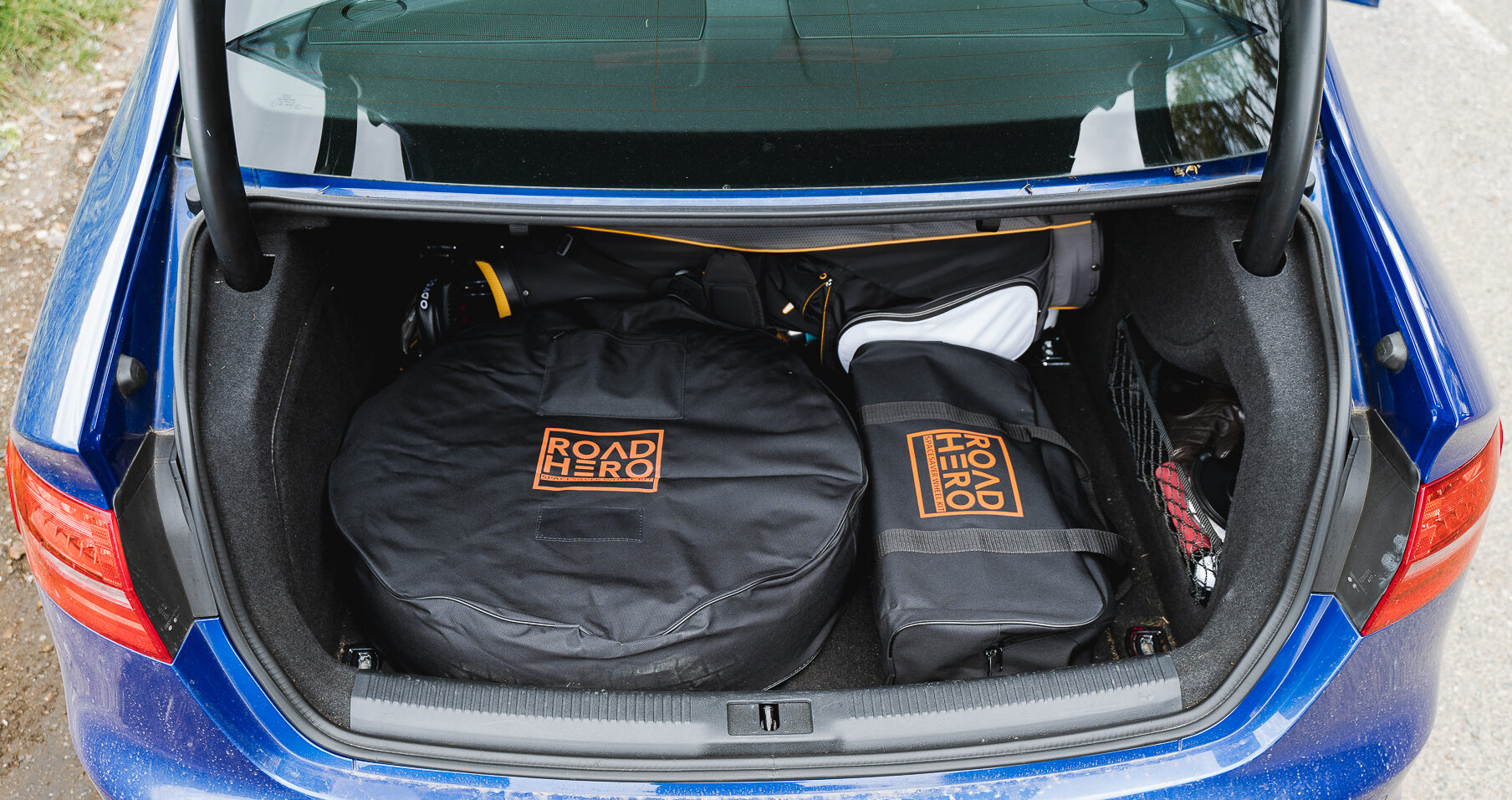
There are luckily many options available nowadays, from full spares to space saver spare wheel kits and inflation kits. There are pro’s and con’s for each type, as smaller cars often do not have enough space for a full spare, which is why space savers come in handy – Road Hero kits also include everything you need for a quick roadside change such as jack, wheel brace, gloves, high-vis vest and warning triangle making it the best option to ensure your car is road ready.
If you need help on deciding which option is best for your particular circumstances, read our guide on the differences between spare wheels vs space savers.
Being Able to Call for Help
It will not always be safe or possible to solve emergencies on the roadside without help, therefore keeping the details of your emergency breakdown service on hand is useful. Always worth to keep a hard copy of the phone number at the least, given internet coverage in rural areas can be unreliable.
What Documents to Keep in the Car
Legal Documents
In the UK, while you do need to ensure to have your legal documents sorted for your vehicle before driving, such as being registered with the DVLA, being up to date with your vehicle tax, comply with MOT checks and be insured, it is not usually advised to keep all of these documents in the car itself.
This is because should the car get stolen, losing that information could make it harder to seek consequence, so better to keep it safe elsewhere.
Out of the above, should you get stopped by the police, you would only need to show your driving licence, a valid insurance certificate and a valid MOT – so make sure you always have these on you.
Your Car’s Manual
While police inspection will not call for your manual, it is worth having it on hand. You may encounter various situations that are very specific to your car, such as new warning lights coming on, wheel change instructions or the correct tyre pressure, all worth keeping around for peace of mind.
Everyday Useful Items – Not Just for Emergencies
Even small items can be incredibly useful when something unexpected happens on the road. A phone charger for your car, particularly a USB charger, ensures you can always contact breakdown services or family if needed. A blanket or extra warm clothing can also be helpful if you need to wait for assistance during cold weather.
Keeping kitchen roll or wipes in the car is another simple but practical tip. These can help clean your hands after checking the engine, changing a wheel or dealing with muddy equipment.
Non-perishable snacks, such as crisps or energy bars can also come in handy should you experience large wait times, congestions, or unexpected break down.
It’s also a good idea to keep a small amount of spare change, which can still be useful for older parking machines or car parks that don’t accept cards.
If you are going somewhere rural, for a hike or to the beach, it is often worth having a change of shoes that you can drive comfortably in should your shoes get wet or muddy outside.
Seasonal Items to Keep in Your Car
Weather conditions can change quickly, so it helps to adapt what you keep in your car throughout the year. Each season brings its own unique issues, and its worth being prepared accordingly.
Winter
During colder months, it’s sensible to keep an ice scraper and de-icer spray in the vehicle to clear your windscreen quickly. Extra warm clothing or a blanket can also be helpful if you are delayed or waiting for assistance.
Summer
In warmer weather, items such as sunglasses can improve visibility and reduce glare while driving. It can also be helpful to keep a bottle of water in the car during longer journeys.
Spring and Autumn
These seasons often bring unpredictable rain showers, so keeping a compact umbrella in the car can be useful when getting in and out of the vehicle. Road Hero kits also include a rain poncho, for this exact reason.
To Sum Up
Planning ahead is the key differentiator between a stressful, time draining situation and a mild inconvenience. If you are new to driving, just bought a new car or preparing for a longer trip, ensuring you have these items in your vehicle will enable you to continue your journey with the smallest disruptions should an incident arise swiftly and headache free.
Choose Road Hero — Be prepared. The right tools, at the right time.
- Find a retailer → https://www.roadhero.co.uk/retailers/
- FAQs → https://www.roadhero.co.uk/faqs/
- Technical information → https://www.roadhero.co.uk/technical-information/
Safety first: Always follow your vehicle handbook. Use temporary spares exactly as labelled. If you are unsure, speak to a qualified technician.