

Why tyre failure increases in summer heat
Hot weather can put more strain on your tyres than you might expect. Understanding why tyre failures increase in summer can help you stay safe and avoid unexpected breakdowns.
Just as the pothole problem of the roads are getting worse year over year due to more volatile weather conditions, summers are getting hotter and dryer with more prevalent heatwaves, causing problems for drivers.
While many drivers associate tyre issues with winter conditions, summer presents its own set of risks. Higher temperatures, longer journeys and heavier vehicle loads all contribute to an increased likelihood of tyre failure during warmer months due to a variety of reasons.
Heat and tyre pressure
As temperatures rise, the air inside the tyres expands, which increases tyre pressure. This can lead to overinflation, making the tyre less flexible and more susceptible to damage from potholes, debris or uneven road surfaces.
At the same time, tyres that are already underinflated or worn can struggle to cope with the added heat, creating excess friction that can lead to overheating and, in more severe cases, a blowout.
Increased road temperatures
Air temperature is only part of the picture. Road surfaces, particularly tarmac, absorb heat throughout the day and can become significantly hotter than the surrounding air. This means your tyres are exposed to continuous high temperatures, especially on long motorway drives. Over time, this heat can weaken the tyre’s internal structure, particularly if the tyre is older or has existing wear.
Heavier loads and longer journeys
Summer often brings longer trips, whether it’s holidays, day outings or simply more time spent on the road. Vehicles are also more likely to be carrying additional weight from passengers, luggage or equipment. This added load increases the pressure on your tyres, making them more prone to overheating.
Combined with extended driving periods and fewer breaks, tyres have less opportunity to cool down, further increasing the risk of failure.
Reducing the risk of tyre failure
Regular tyre checks become even more important during the summer months. Ensuring your tyres are correctly inflated, in good condition and suitable for the load you are carrying can significantly reduce the chances of a problem. Taking breaks on longer journeys also allows tyres to cool, helping to prevent overheating.
These checks are especially helpful before longer journeys to ensure reduced risks of emergencies. For further preparations, check out our complete list of essentials to keep in the car, handy for pre-holiday or road trip run-through.
Staying prepared
Even with proper maintenance, tyre failures can still happen, particularly in extreme heat. Having a reliable backup in your vehicle can make all the difference.
There are many options to choose from nowadays, from full spares to space savers, run flat tyres and tyre inflation kits – each having their own strengths and limitations depending on your car or particular circumstance.
How space saver spare wheels can help
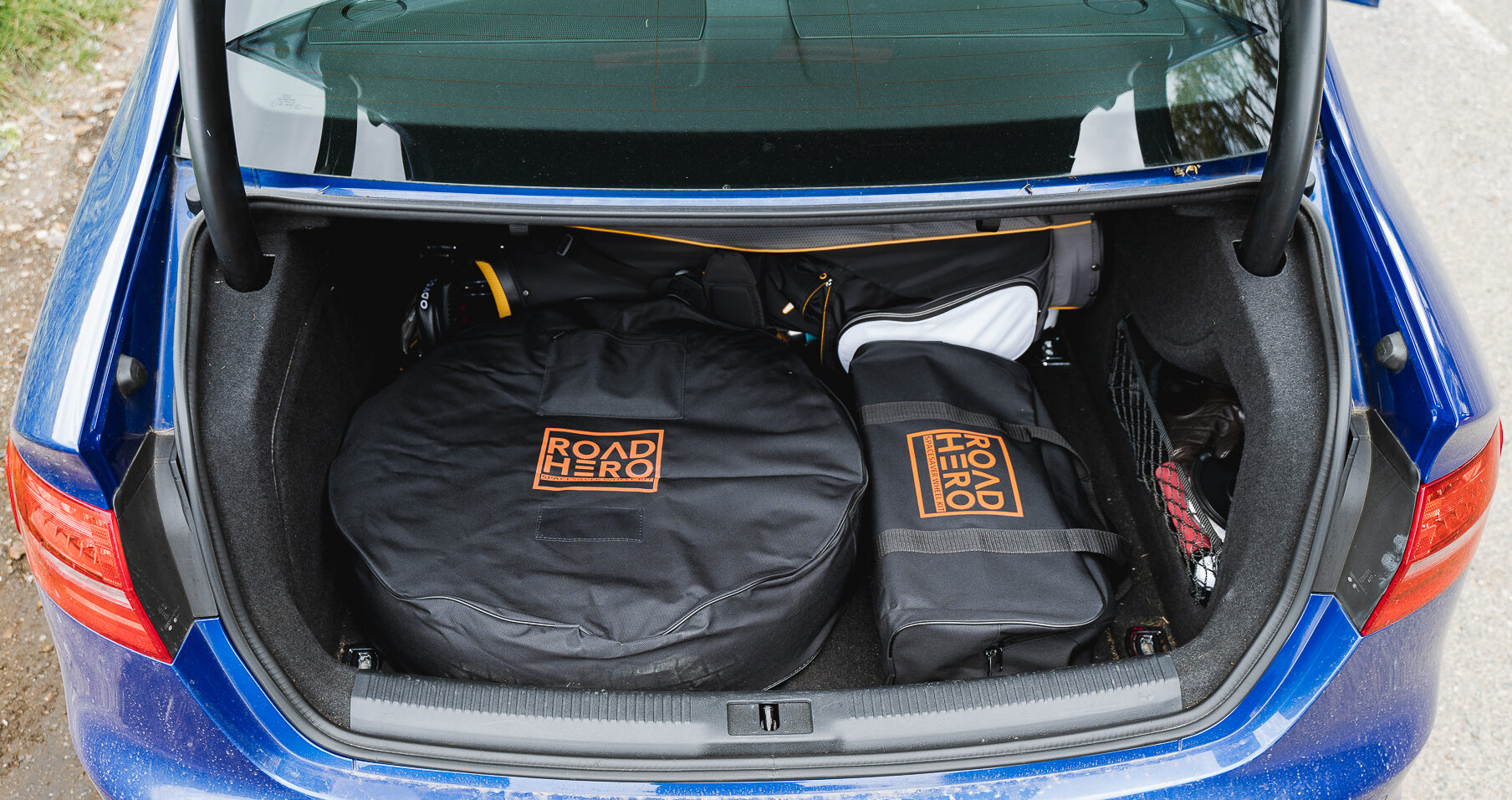
A space saver spare wheel provides a quick and practical solution if you experience a puncture or blowout, allowing you to continue your journey without relying on messy repair kits or waiting for recovery.
Our kits are designed for specific vehicle fitments and include the tools needed for a roadside change, making them a convenient and dependable solution for drivers who want added peace of mind, especially during longer summer journeys.
Finding the right fit is easy – browse by car makes or simply input your car’s registration number into our tool to find the best option for your car.
To sum up
Summer driving conditions can put unexpected strain on your tyres, increasing the likelihood of failure if they are not properly maintained. By understanding the impact of heat and having the right checks and preparations, you can stay safer on the road and avoid unnecessary disruptions to your journey.
Choose Road Hero — Be prepared. The right tools, at the right time.
- Find a retailer → https://www.roadhero.co.uk/retailers/
- FAQs → https://www.roadhero.co.uk/faqs/
- Technical information → https://www.roadhero.co.uk/technical-information/
Safety first: Always follow your vehicle handbook. Use temporary spares exactly as labelled. If you are unsure, speak to a qualified technician.